
The Shockingly Simple 4-Step Method Used By a 20-Year Bedside Physician to Deliver Hard News Well
A free guide for anyone who has to say the hard thing: to a patient, a partner, a coworker, or your own kid.
Send me the guide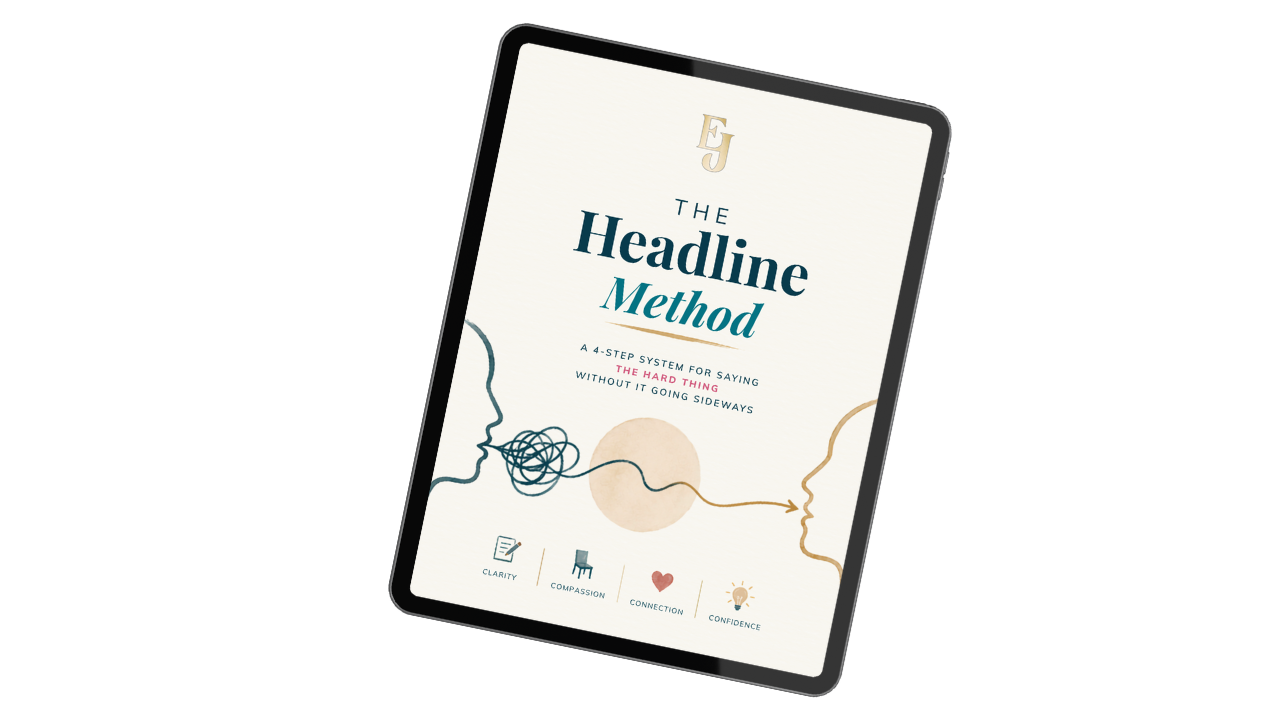
After 20 years of sitting at bedsides delivering news no one wants to hear, here's what I've learned: most hard conversations fail not because of what we say. They fail because we didn't set the table first, or we said too much, too fast, before the other person was ready to hear it.
The Headline Method is the system I use to have hard conversations with clarity, care, and confidence. It works in clinical settings. It works at home with your kids. It works in your marriage, and anywhere else you need to say something true that might be hard to hear.
We call them hard conversations because they are hard. But they don't have to be disasters. And you don't have to feel your stomach drop every time you know one is coming. This guide gives you four simple steps to make even the hardest conversations land well and protect the relationships that matter most to you.
What to say in the first ten seconds to lower defensiveness before it starts
Why saying too much, too fast, is the most common way hard conversations go sideways
How to stay grounded and clear even when the other person reacts hard
This guide is for you if:
- You've rehearsed a hard conversation in the shower a dozen times and still didn't know where to start
- You've watched a conversation go sideways and walked away wondering what you could have done differently
- You have to deliver hard news as part of your job, and you want to do it with more skill and less dread
- You avoid hard conversations at home until they turn into blowups

Created by Emma Jones, MD
Years of clinical conversations show that the hardest moments rarely come from not knowing enough. They come from being asked to provide certainty where none exists.